
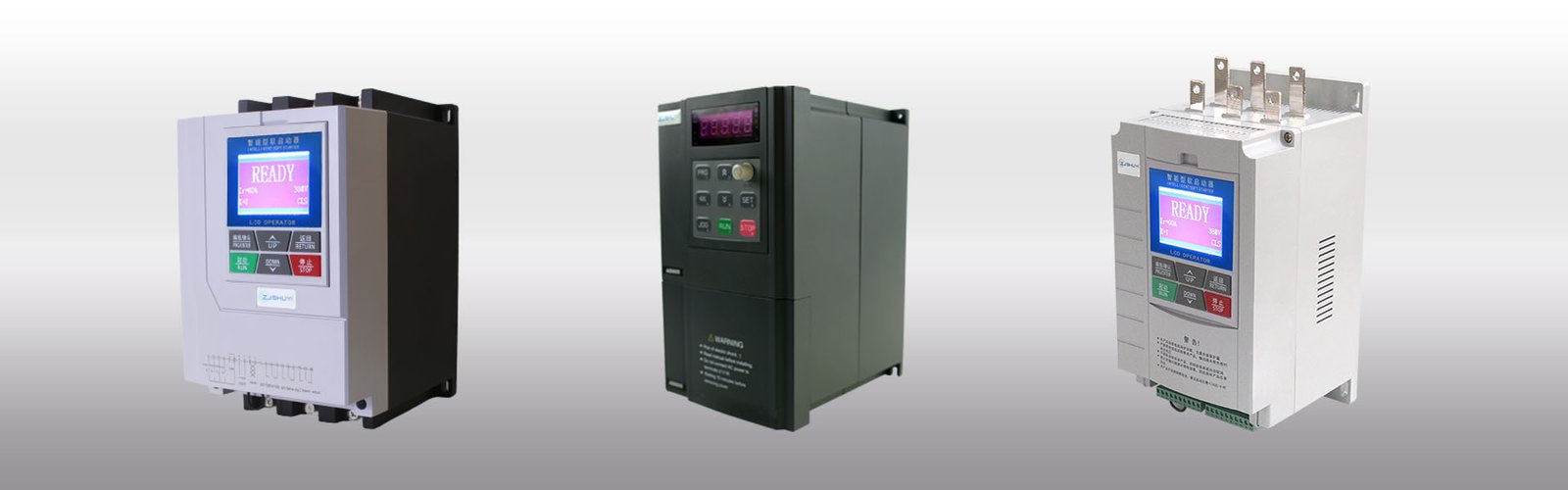
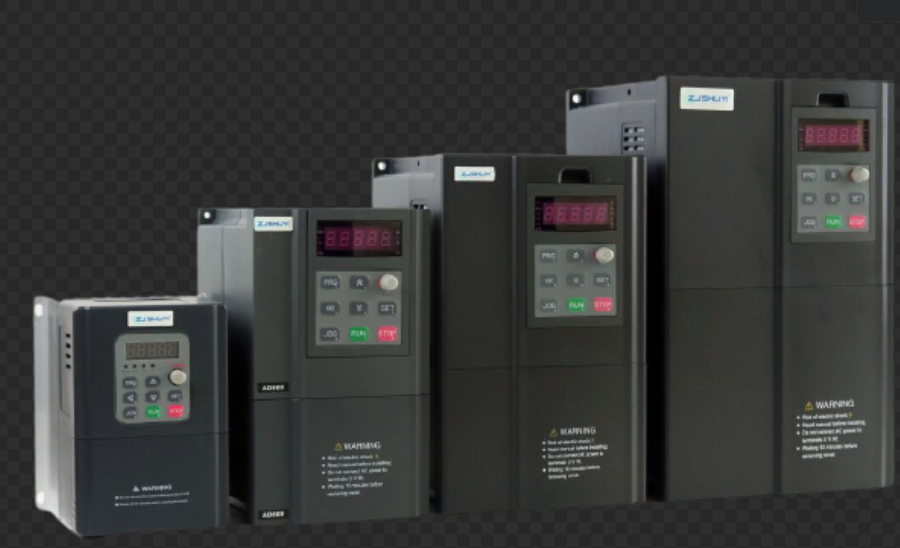
Unexpected VFD malfunctions can disrupt industrial workflows and increase costs. SHUYI VFD Troubleshooting Guide simplifies identifying and resolving common problems, empowering operators to act quickly without extensive technical expertise.
For more about our products, please click here.
1. Overcurrent Faults: Causes & Instant Fixes
Overcurrent faults (displayed as “OC” on SHUYI VFDs) are among the most frequent issues in industrial settings. They often occur during motor startup or heavy-load operation.
Common triggers include short-circuited motor windings, damaged power cables, or incorrect current limit settings. Loose connections between the VFD and motor can also cause sudden current spikes.
To resolve this, first stop the VFD and inspect cables for fraying or damage. Use a multimeter to check motor windings for short circuits. Adjust the current limit parameter to match the motor’s rated current—SHUYI’s user-friendly interface makes this adjustment intuitive.
SHUYI VFDs feature built-in overcurrent protection that limits damage, but addressing the root cause promptly prevents repeated faults.
2. Overvoltage/Undervoltage Issues: Stabilizing Power Supply
Voltage irregularities (marked “OV” for overvoltage, “UV” for undervoltage) stem from unstable grid power or improper wiring. They risk damaging the VFD’s internal capacitors and IGBT modules.
Overvoltage often happens when regenerative energy from motor deceleration exceeds the VFD’s capacity. Undervoltage typically results from weak grid supply or undersized power cables.
For overvoltage, enable SHUYI’s regenerative braking function or install an external brake resistor. For undervoltage, check the grid voltage with a tester and replace undersized cables with thicker, higher-gauge options.
SHUYI VFDs have voltage tolerance ranges (380-480V for 3-phase models) — ensuring the power supply stays within this range prevents these faults.
3. Overheating Alarms: Restoring Thermal Balance
Overheating alarms (“OH” on the display) occur when the VFD’s internal temperature exceeds 60℃. This is common in dusty environments or when cooling systems fail.
Clogged heat sinks, malfunctioning cooling fans, or operating the VFD beyond its rated load for extended periods are key causes. High ambient temperatures in factories also contribute to overheating.
Clean the heat sink with compressed air to remove dust buildup. If the fan is faulty, replace it with a SHUYI-compatible spare part. Reduce the load or install additional ventilation if ambient temperatures are too high.
SHUYI’s enhanced thermal management design includes temperature sensors that trigger early alarms, giving operators time to act before shutdown.
4. Motor Failure to Start: Troubleshooting Connection & Settings
A motor failing to start when the VFD is powered on is often due to communication or parameter mismatches. It can also indicate a faulty motor or wiring error.
First, verify that the VFD’s run command is correctly sent—check the control signal (e.g., from a PLC or remote switch). Ensure the motor’s rated voltage, frequency, and power match the VFD’s settings.
Inspect the motor’s power and control cables for loose or reversed connections. If the motor is seized, manually rotate the shaft to check for jamming—this is a common issue in pumps and conveyors.
SHUYI VFDs provide detailed error codes for startup failures, guiding operators to the exact problem without guesswork.

5. Communication Connection Errors: Re-establishing Links
Communication errors (shown as “COMM” or “ERR” on SHUYI VFDs) occur when the VFD fails to connect with external devices like PLCs, HMIs, or sensors.
Misconfigured communication parameters (e.g., baud rate, protocol type) are the primary cause. Damaged communication cables or poor grounding can also disrupt signals.
Confirm that the VFD’s communication protocol (e.g., Modbus TCP, Profibus) matches the external device. Reset the baud rate to the default (9600 bps for most SHUYI models) or the device’s specified value.
Replace damaged cables and ensure proper grounding to reduce electromagnetic interference. SHUYI’s communication self-test function helps verify if the connection is restored after adjustments.
Web: www.shuyitop.com
Tel/Fax: 0086-577-62840011
Wechat/WhatsApp: 008613355775769
Zhejiang SHUYI Electric Co., LTD, Focus On Switches With 30 Years.
VFDs #Frequency Converter #Frequency #Inverter #Motor protection #Motor #Soft starters and frequency converters #VFD Troubleshooting Guide
